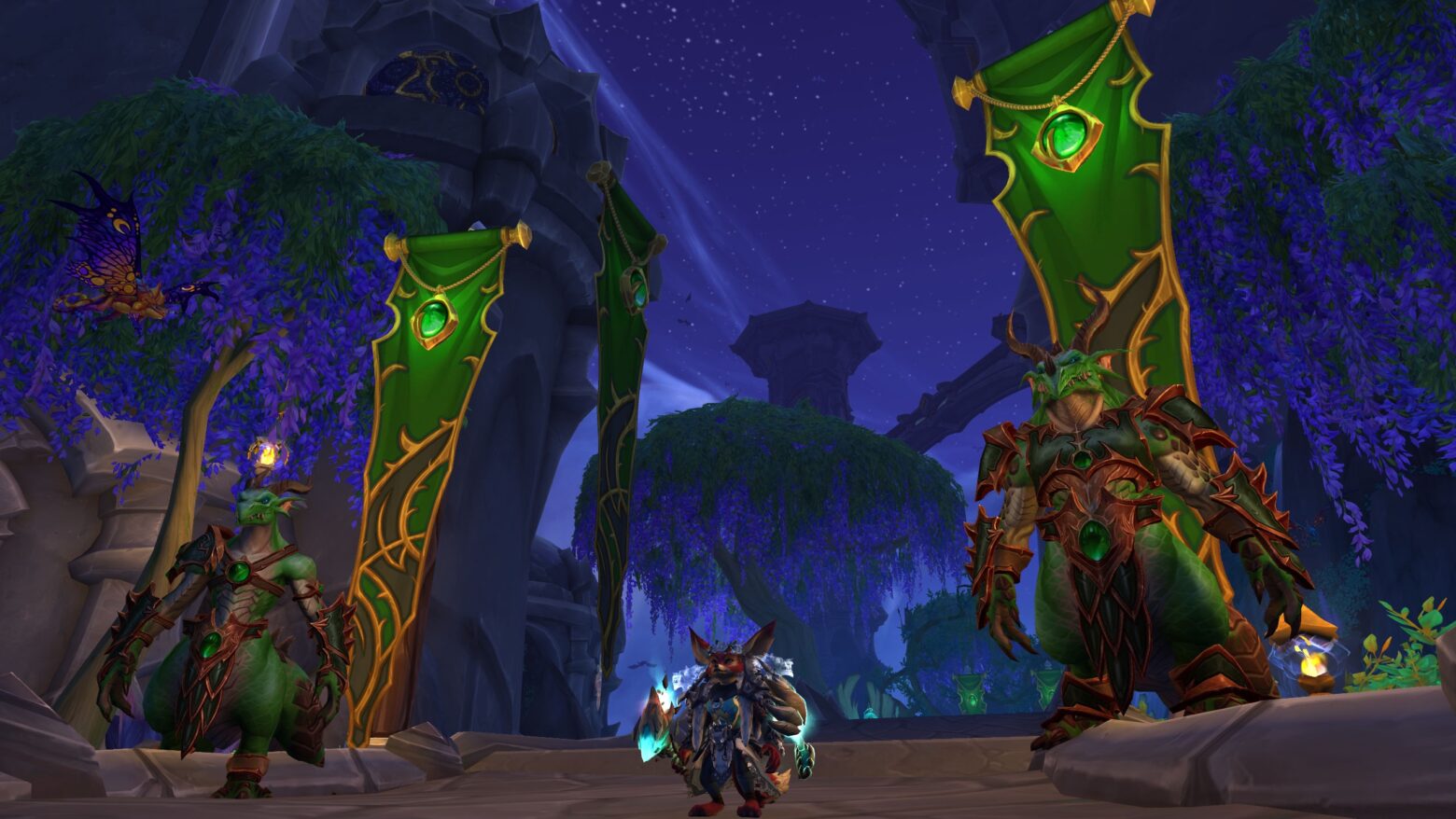
Understanding raid tiers in World of Warcraft is key for conquering its toughest challenges and earning top-tier rewards. Raid tiers represent different levels of end-game content that increase in difficulty and complexity. You’ll need to master unique mechanics and foster teamwork to progress. Early tiers help you develop skills and gain essential gear, while mid-game and end-game raids test your adaptability and strategy. Effective communication, preparation, and smart loot distribution are crucial. As you ascend from Normal to Heroic and Mythic, challenges become more intense, requiring precise execution. Learn more about mastering this intricate progression system.
Key Takeaways
- Raid tiers signify levels of end-game content progression with increasing difficulty and unique raid mechanics.
- Gear and rewards from raids are essential for character development and optimizing performance.
- Teamwork and clear role understanding are critical for succeeding in challenging raid encounters.
- Raid difficulty ranges from Normal to Mythic, with complexity increasing at each level.
- Early raid tiers focus on skill development, while mid-game and end-game raids demand advanced tactics and preparation.
What Are Raid Tiers?
Let’s explore the concept of raid tiers in World of Warcraft. Raid tiers represent different levels of end-game content that challenge players with unique raid mechanics and bosses. Each tier introduces a set of raids that demand you and your group to develop meticulous tier strategies to succeed.
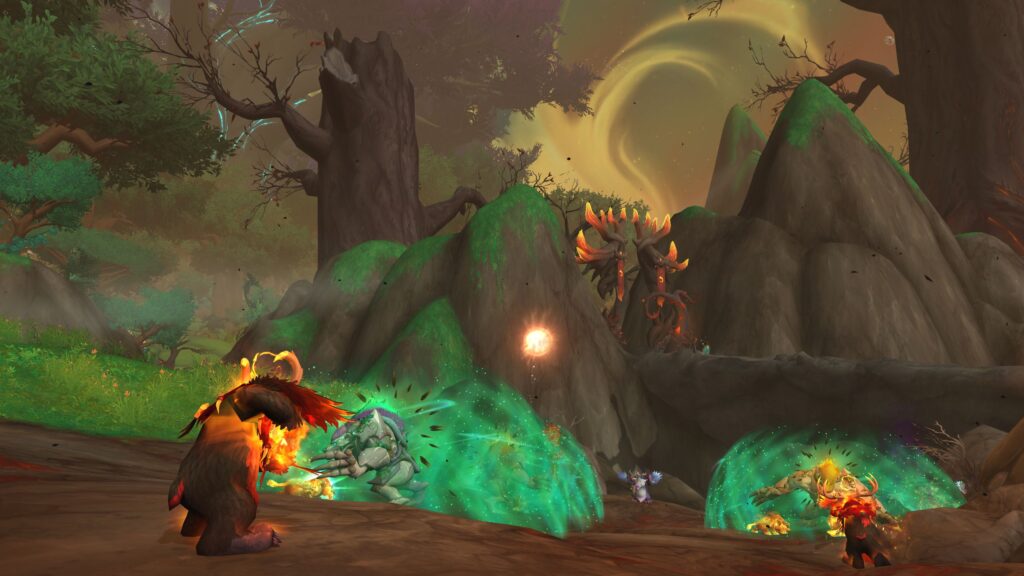
First, understanding raid mechanics is essential. These are the specific abilities, attacks, and phases bosses use within a raid. You’ll need to master these to progress. Each raid tier ramps up the complexity and difficulty, testing your skill and coordination.
Tier strategies involve crafting and executing plans tailored to overcome these specific challenges. For instance, some encounters might require precise positioning, while others depend on split-second timing or efficient resource management. Your ability to adapt your strategy to each tier’s unique challenges can determine your group’s success.
Importance of Raid Tiers
Understanding the importance of raid tiers in World of Warcraft isn’t just about overcoming challenges; it’s about your progression through increasingly difficult content. Each tier offers unique gear and rewards, incentivizing you to push your limits. Plus, maneuvering through these raids with your community fosters teamwork and strengthens bonds among players.
Progression Through Challenges
Mastering raid tiers in World of Warcraft isn’t just about the thrill of taking down colossal bosses; it’s an essential pathway for progression and personal improvement. The game’s difficulty scaling provides a series of challenging encounters that test your team’s dynamics and cooperative gameplay. Strong strategic planning becomes paramount as you explore each raid tier’s unique encounter mechanics, from normal to mythic progression.

Facing intricate boss challenges requires your group to exhibit impeccable raid synergy. You’ll have to adapt quickly, employing adaptive tactics to overcome obstacles that grow more intense with each tier. This constant evolution guarantees that your team doesn’t just repeat the same strategies, but progressively hones its skills and coordination.
Each new tier introduces tougher scenarios, fostering an environment where making small errors can lead to failure, thereby emphasizing meticulous planning and execution. In mythic progression, particularly, the complexity of fights demands an even deeper understanding of the game’s systems and a high level of individual performance within the group setting. By constantly confronting these formidable challenges, you and your team evolve, enhancing both your in-game prowess and collaborative skills, ultimately enriching your World of Warcraft experience.
Gear and Rewards
In World of Warcraft, acquiring top-tier gear and rewards through raid tiers is fundamental to your character’s development and success. Gear diversity guarantees that each piece you obtain can be optimized to maximize your performance. Understanding the reward systems is essential for maneuvering how items are distributed and guaranteeing you get the best possible loot.

Itemization strategies help you focus on the right upgrade paths, allowing you to enhance your character efficiently. Specific gear pieces can be combined to activate set bonuses, offering powerful enhancements that can considerably boost your abilities. Additionally, raid tiers often yield valuable crafting materials, which are vital for creating or upgrading gear.
Gear optimization involves the careful selection of items to make sure they align with your stat priorities, whether you’re aiming for higher critical strike, haste, or versatility. Loot distribution in raids plays an important role in assuring fairness and efficiency in how rewards are shared among your team. Seasonal rewards introduce a cyclical opportunity to acquire unique items and gear that might only be available for a limited time, adding another layer of excitement and importance to your raiding endeavors.
Community and Teamwork
When it comes to raid tiers in World of Warcraft, the significance of community and teamwork can’t be overstated. You’ll find that mastering these challenging encounters requires more than just individual skill; it demands thorough communication strategies. Clear and precise instructions between players can make the difference between success and failure. Team synergy also plays an essential role, ensuring that every player understands their responsibilities and how they mesh with the group.
Player roles are another important factor. Everyone must know their part, from tanks and healers to DPS, to execute collaborative tactics effectively. Leadership dynamics are equally essential; good leaders provide direction and maintain group cohesion. They also play a key role in conflict resolution, mediating disputes that arise during stressful moments.
Motivation techniques are often necessary to keep the team focused and engaged. Recognizing individual and group achievements can bolster morale and drive. Lastly, successful raid organization involves meticulous planning, from scheduling raids to gathering necessary resources. All these elements together create a cohesive unit that can tackle the most formidable raid tiers, proving that teamwork is indeed the backbone of your success in World of Warcraft.
Early Raid Tiers
When you first experience World of Warcraft’s early raid tiers, you’ll encounter entry-level content designed to gear players up and propel them through progression stages. Pay attention to the key boss mechanics, as mastering these will be essential for advancing to higher difficulties. These initial raids set the foundation for your journey, ensuring you build the skills needed for future challenges.
Entry-Level Raid Content
Starting off in World of Warcraft’s raiding scene can be an intimidating task, but early raid tiers are specifically crafted to bridge the gap between casual and hardcore players. These entry-level raids provide a structured learning environment where you can hone your skills and familiarize yourself with group dynamics. Beginner strategies are essential here, focusing mainly on mastering basic mechanics and teamwork.
One of the key benefits of early raid tiers is their accessibility. They allow you to:
- Gain experience with raid mechanics without feeling overwhelmed.
- Learn the importance of role coordination.
- Get used to communication tools like voice chats.
- Build confidence in your abilities.
- Foster teamwork and camaraderie.
Understanding these beginner strategies helps smooth out the learning curve. For instance, paying attention to boss abilities and learning how to dodge or counter them will serve you well in more advanced raids. These entry-level raids are designed with a slower pace, reducing the pressure and encouraging a trial-and-error approach.
While your gear and stats will matter eventually, the focus here is on skill development and learning the ropes. By the time you move on to more challenging content, you’ll have a solid foundation, making the progression journey both effective and enjoyable.
Gear and Progression
Acquiring the right gear in the early raid tiers is paramount to your progression in World of Warcraft. As you tackle initial raids, gear enhancement becomes a focal point, directly impacting your success. Not only does better gear boost your damage and defense, but it also improves overall raid compositions, guaranteeing your team can handle tougher encounters seamlessly.
In early raid tiers, focus on obtaining gear that complements your class and role. Healers need gear with high mana regeneration, DPS players should prioritize items that enhance their primary stats, and tanks require gear that boosts their survivability. Tailoring your gear isn’t limited to the items you equip; you should also research and utilize the best enchantments and gems available.
To expedite your progress, participate in your guild’s raid events and utilize loot systems that guarantee fair distribution. Communicate with your team to understand what each role requires for effective raid compositions. This collaboration ensures that every member is performing at their best, contributing to the overall success of the raid.
Key Boss Mechanics
Having the right gear sets the stage for tackling the first raid bosses with confidence. Understanding the key boss mechanics of early raid tiers is vital for your team’s success. These bosses often test your ability to manage:
- Boss abilities: Learn and adapt swiftly to each boss’s unique attacks.
- Encounter strategies: Develop a thorough plan involving every team member.
- Damage mechanics: Recognize and mitigate high-damage phases to survive.
- Healing tactics: Guarantee healers are ready to respond to burst and sustained damage.
- Tank responsibilities: Tanks must position the boss and manage aggro effectively.
In early raid tiers, phase shifts are critical moments. Each shift may introduce new environmental hazards, requiring quick adaptation and perfect coordination. Debuff management is another key aspect—timely cleansing can save your team from overwhelming damage.
To tackle these encounters, your team must understand the damage thresholds for various boss abilities and plan accordingly. Crowd control isn’t just for trash mobs; some bosses summon adds that must be managed to prevent chaos. Tanks need to maintain solid aggro management while staying mobile to avoid environmental hazards.
Mid-Game Raid Tiers
Steering through the mid-game raid tiers in World of Warcraft marks a pivotal moment in your journey, where the complexity of encounters increases and coordination within your raid group becomes vital. Mid-game challenges test not only your individual skills but also the synergy of your team. Mid-game strategies become significant as you face bosses with more intricate mechanics.
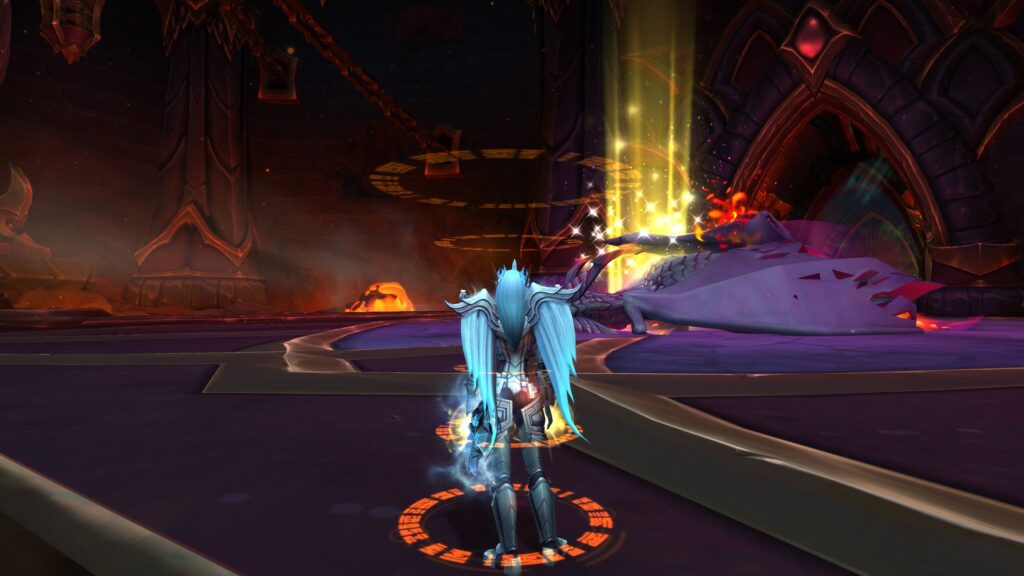
Effective mid-game teamwork hinges on everyone knowing their role and mastering mid-game boss mechanics, from interrupting key abilities to handling unique boss phases. Mid-game encounters are designed to push you beyond the basics, requiring tight execution and quick reflexes.
Mid-Game Raid Factors
| Aspect | Importance | Example |
|---|---|---|
| Mid-Game Challenges | Tests adaptability of the raid team | Handling multiple add waves simultaneously |
| Mid-Game Strategies | Vital for overcoming tougher bosses | Coordinating cooldowns for burst phases |
| Mid-Game Gear | Better gear is necessary for progression | Acquiring tier sets from earlier raid bosses |
| Mid-Game Boss Mechanics | Understanding starts to deepen | Learning to mitigate new environmental hazards |
Mastering these elements guarantees your group is well-prepared for the heightened stakes of mid-game encounters, creating a foundation of skill and coordination that’ll carry you forward in the World of Warcraft raid tiers.
End-Game Raid Tiers
As you shift into the end-game raid tiers of World of Warcraft, the stakes reach their highest, demanding not just advanced gear but peak player performance and seamless team coordination. Mythic difficulty sets the bar, challenging even the most seasoned raiders with its meticulously tuned boss encounters and intricate fight choreography.
To master end-game raids, prioritizing effective progression strategies is vital. This includes:
- Determining Ideal Raid Roles: Assign roles to leverage each player’s strengths.
- Perfecting Your Raid Composition: Balance between tanks, healers, and DPS for maximum efficiency.
- Honing Team Synergy: Guarantee that all members communicate flawlessly and execute mechanics in unison.
- Crafting Robust Raid Preparation: Devote time to understanding boss strategies, encounter tuning, and individual assignments.
- Implementing Smart Loot Distribution: Apply systems that reward effort while enhancing overall raid effectiveness.
Effective end-game raiding also requires an analytical approach to fight choreography—breaking down each phase of a boss encounter to refine tactics. Team synergy becomes essential as you tackle complex mechanics and react to dynamic events. By focusing on these elements, not only can you conquer the toughest challenges, but you can also experience the exhilarating satisfaction of mastering World of Warcraft’s pinnacle content.
Gear Progression
Achieving ideal gear progression is essential in World of Warcraft, directly impacting your ability to tackle more challenging content. Gear acquisition follows a strategic path involving quest rewards, dungeon runs, and rare drops. Mastering itemization strategies and identifying upgrade pathways guarantees you’re always optimizing your character’s performance.
| Gear Source | Primary Advantage | Disadvantage |
|---|---|---|
| Raid Loot | Superior stats | Lacks guaranteed drops |
| Vendor Gear | Consistency | Generally lower stats |
| Crafting | Customizability | Requires materials |
| Rare Drops | High value | Erratic drop rates |
| Set Bonuses | Enhanced effects | Requires multiple pieces |
Understanding these sources and their trade-offs is significant. Raid loot distribution often prioritizes class roles and performance, making efficient use of your guild’s resources. Vendor gear fills gaps but may lack punch compared to raid drops.
Crafting materials play a major role, offering an avenue to create personalized gear that meets specific needs. Rare drops can be a game-changer if luck’s on your side, but relying solely on them can be risky. Set bonuses provide substantial benefits if you manage to collect all required pieces. Finally, don’t overlook transmog options—they can bolster your morale and confidence as you face progressively tougher encounters.
Strategy and Teamwork
In the domain of high-stakes raiding, strategy and teamwork are your most crucial allies. To conquer raid tiers, you’ll need a deep understanding of team dynamics and effective communication strategies. Each team member’s role assignment must be clear and precise, ensuring everyone knows their responsibilities.
Consider these key aspects to enhance your raid performance:
- Adaptive tactics: Be ready to change strategies mid-fight based on encounter analysis.
- Synergy building: Foster collaboration among team members to maximize effectiveness.
- Conflict resolution: Address disputes swiftly to maintain focus and morale.
- Leadership roles: Strong leaders guide the team through challenges and keep everyone motivated.
- Practice techniques: Regular rehearsals build muscle memory and refine skills.
Effective communication is essential. Setting up voice chat or using in-game messaging systems can refine your communication strategies. Ensuring everyone is on the same page will streamline actions and increase your raid’s success rate. Motivation factors, such as celebrating small victories, help keep morale high.
Analyzing each encounter and adapting accordingly allows your team to stay ahead. Remember, successful raiding is as much about the collective effort as it is about individual performance. When synergy is built and roles are understood, victory is within reach.
Raid Tier Challenges
Facing the raid tier challenges in World of Warcraft pushes your team to the limits of skill and coordination. Each raid tier introduces new levels of raid difficulty, requiring you and your group to adapt quickly. From Normal to Heroic and Mythic difficulties, the encounters become progressively harder. The bosses possess unique encounter dynamics, ranging from complex mechanics to devastating phases, demanding precise execution from each raid member.
Understanding these dynamics is important. You’ll often need to analyze boss abilities, perfect your positioning, and manage cooldowns effectively. Switching from Normal to Heroic might introduce additional mechanics, whereas Mythic raids offer the pinnacle of challenge, layering even more intricate elements and unforgiving tuning.
But it’s not just about individual performance. Team cohesion is paramount. Communication and coordination are essential as you navigate these grueling environments. Missteps can be costly, so it’s crucial for everyone to understand their role and perform it flawlessly. Each tier acts as both a test and a teacher, providing valuable insights into improving your strategies and execution. Conquering these challenges strengthens your group’s bond and sharpens your raiding prowess, preparing you for whatever the next tier throws your way.
Rewards and Achievements
Tackling the formidable raid tiers in World of Warcraft isn’t just about overcoming relentless challenges; it’s also about the exhilarating rewards and prestigious achievements that come with victory. The game’s intricate loot systems guarantee that every boss drop has the potential to enhance your gear diversity, making progression through these tiers more enticing.
Achievement hunting is a significant part of WoW’s reward structure. Whether it’s executing perfect teamwork dynamics in a complex raid or conquering a heroic boss, each feat brings you closer to coveted progression milestones. These achievements aren’t just badges of honor; they often come with cosmetic rewards that amplify your character’s prestige.
Consider these highlights of WoW’s reward structure:
- Loot systems: Tailor your equipment to meet the demands of higher-tier raids.
- Cosmetic rewards: Collect unique looks that set you apart on and off the battlefield.
- Progression milestones: Celebrate each victory with achievements that showcase your raid history.
- Challenge modes: Engage in difficulty balancing to reveal exclusive content.
- Revealing content: Open the door to new adventures and storylines by successfully clearing raid tiers.
In essence, WoW’s raids are more than just battles—they’re experiences that reward effort, strategic planning, and impeccable teamwork.
Future Raid Tier Trends
Looking ahead, WoW’s raid tiers promise to revolutionize gameplay with evolving mechanics and innovative challenges designed to keep even the most seasoned players on their toes. Future mechanics will integrate more interactive and dynamic environments, forcing you to adapt swiftly. Expect raid environments to become more immersive, utilizing advanced graphics and thematic elements that enhance storytelling and atmosphere.
Design evolution means these raids won’t just be tougher; they’ll be smarter. Difficulty scaling will continue to fine-tune the challenge, making sure every raid group, from casual to hardcore, finds a suitable struggle. Encounter variety will broaden, mixing traditional boss fights with unique puzzle-solving and multi-phase battles.
Social dynamics will also play a critical role. Developers are listening more closely to player feedback, adjusting designs to improve team coordination and communication. This means raids may introduce mechanics that encourage diverse class roles and more intricate synergy between players.
Frequently Asked Questions
How Do You Join a Raid Group in World of Warcraft?
To join a raid group in World of Warcraft, consider different raid types and follow these joining tips. Understand your group role, and guarantee your character preparation is on point. It’s essential to use voice communication for coordination. Finding friends or guild members to raid with makes things easier. Use the in-game Group Finder tool to find suitable groups. Always be ready and communicate effectively to succeed in these epic battles.
What Are the Requirements for Entering a Raid Instance?
To enter a raid instance, you’ll need to meet certain gear score requirements. This guarantees you’re adequately prepared for the raid instance mechanics, which can be quite challenging. Make sure your character’s gear is of excellent quality and you’ve completed any prerequisite quests. Joining a guild often helps, as they typically have members who understand the necessary preparation. Don’t forget to check for any level requirements too.
How Can I Find a Good Raid Guild to Join?
It’s funny, you might stumble upon the perfect guild just when you’re about to give up. To find a good raid guild, use guild recruitment strategies like scanning forums and in-game notices. Engage with the community: join discussions, attend events, and post on social media. Your involvement will highlight your commitment. Don’t forget to reach out to potential guilds, showing genuine interest to make a strong impression.
What Addons Are Essential for Effective Raiding?
You’ll need essential addons for effective raiding. Get Deadly Boss Mods for encounter mechanics, and WeakAuras for class synergy. Healing strategies benefit from addons like HealBot or VuhDo. Dungeon preparation is smoother with Details! for tracking performance. Also, consider GTFO for avoiding avoidable damage. Each of these tools helps you stay focused and enhances your team’s coordination, ensuring you’re raid-ready and able to optimize your contributions.
How Do Server Time Zones Affect Raid Scheduling?
Server synchronization and time zone impact are essential when scheduling raids. If your guild has members from different regions, you’ll face coordination challenges. Ensuring everyone logs in simultaneously means accounting for varying local times, which can complicate planning. Using server time as a common reference point helps streamline scheduling, but you’ve still got to take into account how differences in time zones affect player availability and consistency in attendance. Effective communication is key.
Conclusion
In the domain of World of Warcraft, understanding raid tiers is essential for mastering your progression journey. You’ve explored the significance, challenges, and rewards of early, mid, and end-game raids. Remember, “knowledge is power,” and strategic teamwork will always be your best ally. As future raid tiers evolve, stay adaptable and innovate your tactics. Embrace these principles and you’ll conquer the toughest raids, securing both prestigious rewards and commendable achievements. Keep raiding and stay legendary!
Follow my blog and find more content!


